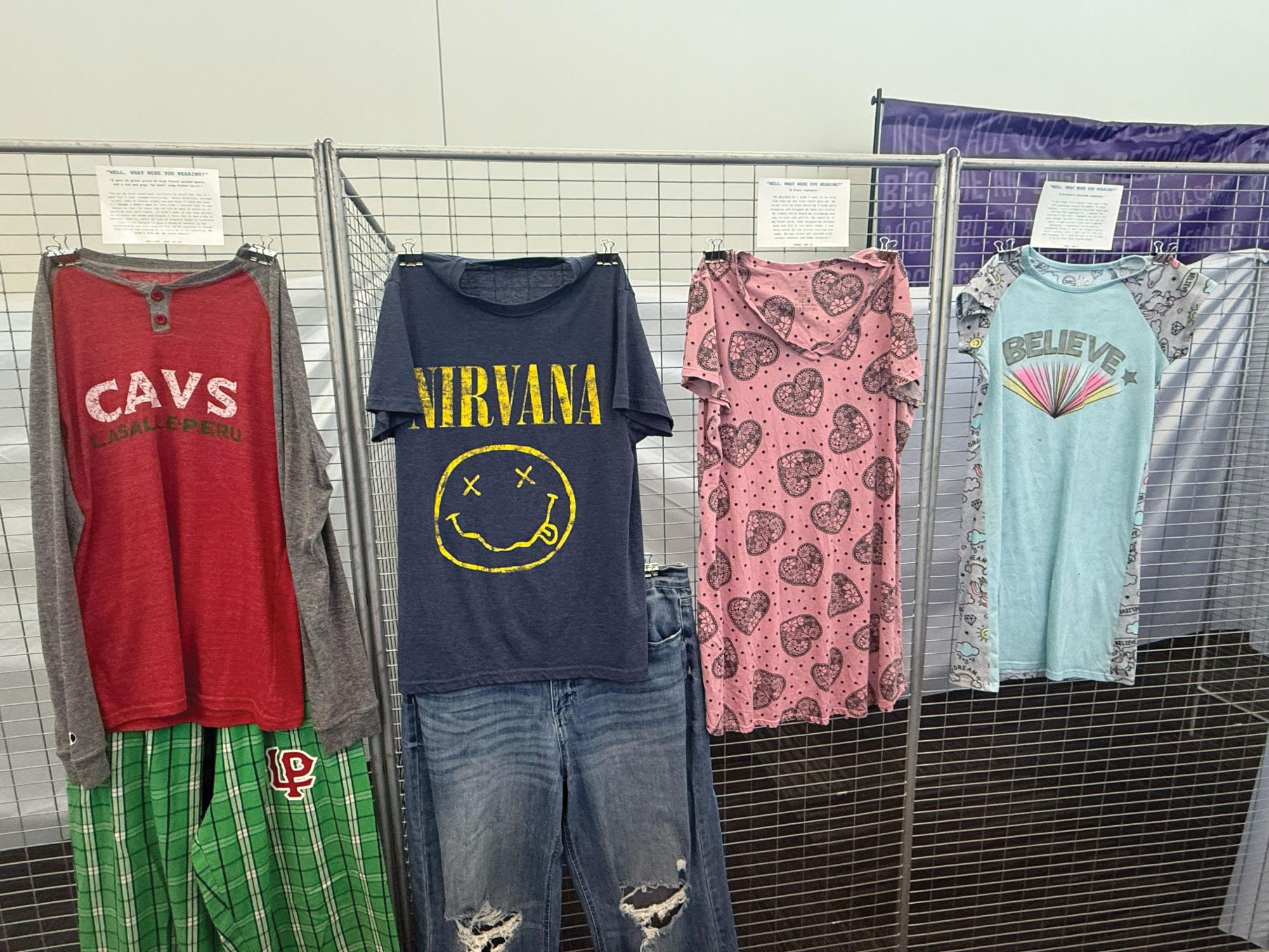
At IVCC, Women’s History Month isn’t just being observed; it’s being felt. March brings a series of celebrations to campus, including an exhibit titled “Well, What Were You Wearing?: An Exhibition of Survival,” presented by Safe Journeys.
The exhibit is displayed in the front lobby.
The exhibit features recreated outfits worn by local survivors of sexual assault at the time of their attacks, each accompanied by a brief description of their story. These displays offer strength, visibility, and a sense of community for those who have shared experiences of violence.
The title, “Well, What Were You Wearing?” recalls a common response that often blames the victim of sexual assault rather than the perpetrator.
IVCC is also hosting a series of Brown Bag Lunch events, where students can snack while learning from presentations focused on women and women’s history.
Women’s History Month matters because it restores stories that were ignored, dismissed, or erased. It reminds us that women have shaped every part of our society, often without recognition, and that their rights and safety are essential to a healthy democracy.
This is why victim‑blaming questions like “What was she wearing?” are so damaging. They shift attention away from the violence committed and reduce a survivor’s experience to an outfit, as if clothing, not the perpetrator, caused the assault.
And this history isn’t just for women. Men benefit from understanding it too, because the fight for women’s rights has expanded freedoms, protections, and opportunities for everyone.
Current events show how fragile that progress can be. Critics warn that the proposed SAVE act could make voting harder for many Americans, including women. Meanwhile, the Epstein files reveal that both women and men tried to report his abuse for years but were ignored. These failures echo a long pattern of institutions not taking women seriously.
This makes the 2026 recognition of Women’s History Month more important than ever.